
Five weeks has gone ridiculously fast, but I can genuinely say that I have gained so much in that amount of time, in terms of both the project-related knowledge and also so much confidence in my technical abilities.
PROJECT AIM AND OBJECTIVES
- To explore the application of different sized avatars for digital pattern grading.
- To analyse anthropometric data across a range of women’s body sizes. Evaluate the process of 3D visualisation in garment product grading.
- To establish a gap analysis from practical experimentations.
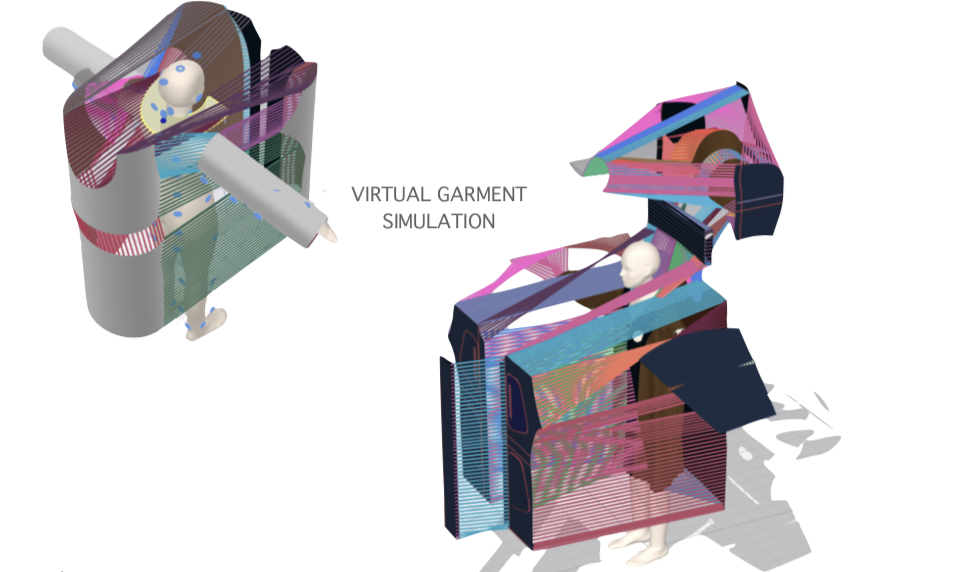
The final outcome of this project was initially envisaged as being a digital outcome; a simulation of Grace’s sail jacket on various sized avatars. This outcome is still in process and hopefully a complete simulation will be achieved in the near future. The simulated garment, currently on an EU 34 (size S) avatar, has reached the stage of being successfully arranged and sewn, but the virtual fabrics must still be developed in order to fully simulate the garment in the desired style.
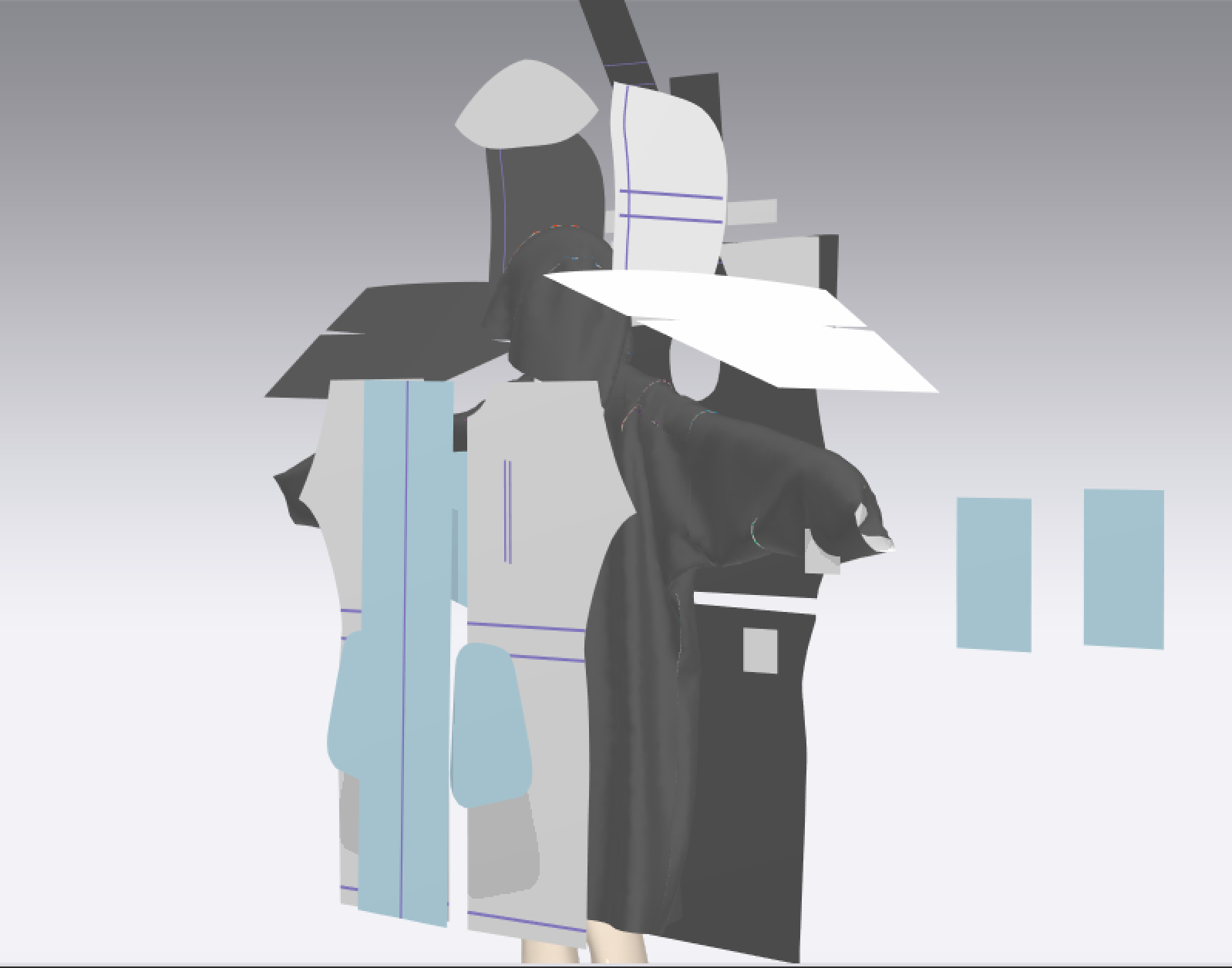
From this project I have learned how to use and critique new software, I have learned how to correct, grade and export patterns, and also how to revise size specifications in line with UK standard grade increments. I feel confident in using digital methods of pattern creation, adaptation and avatar creation, and this could definitely become part of my work in the future – which I think is SO exciting…
I really do think that using garment simulation software such as Clo3D could improve our ability to design and develop clothing for different sized bodies – but the logistics and intricacies have a long way to go yet.
Firstly, having tried to create an avatar from anthropometric data (my own body measurements taken from the 3D body-scanner), I can see how difficult using accurate body measurements for avatar creation can be. For this project we used avatars provided by Alvanon, and although these are well graded and highly regarded within the industry, the body shapes are obviously smoothed down and not entirely representative of real-life weight distribution. In order to better represent real body shapes and sizes, real women must be used to derive body measurements.
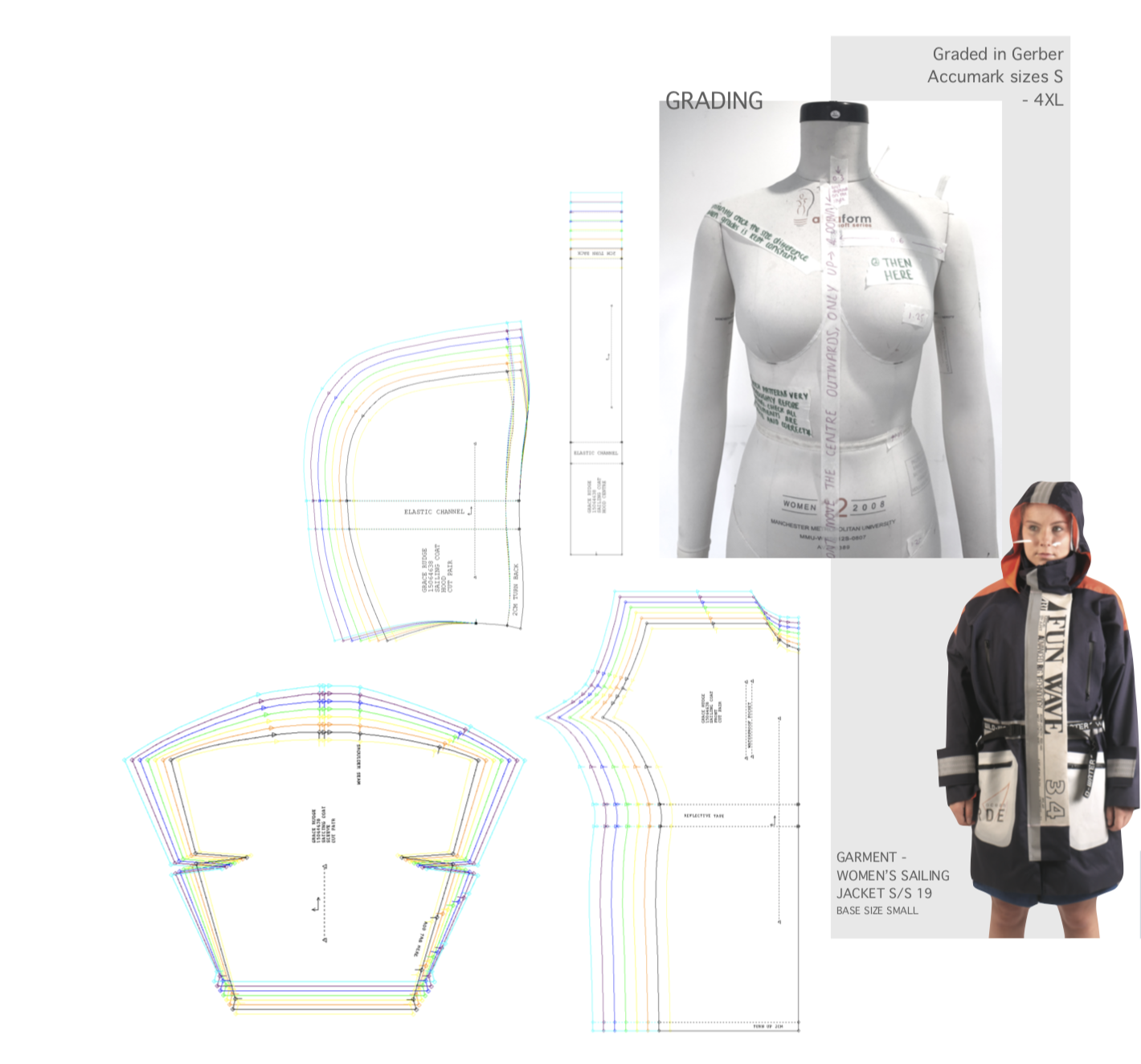
My mannequin method of learning grading
The sail jacket.
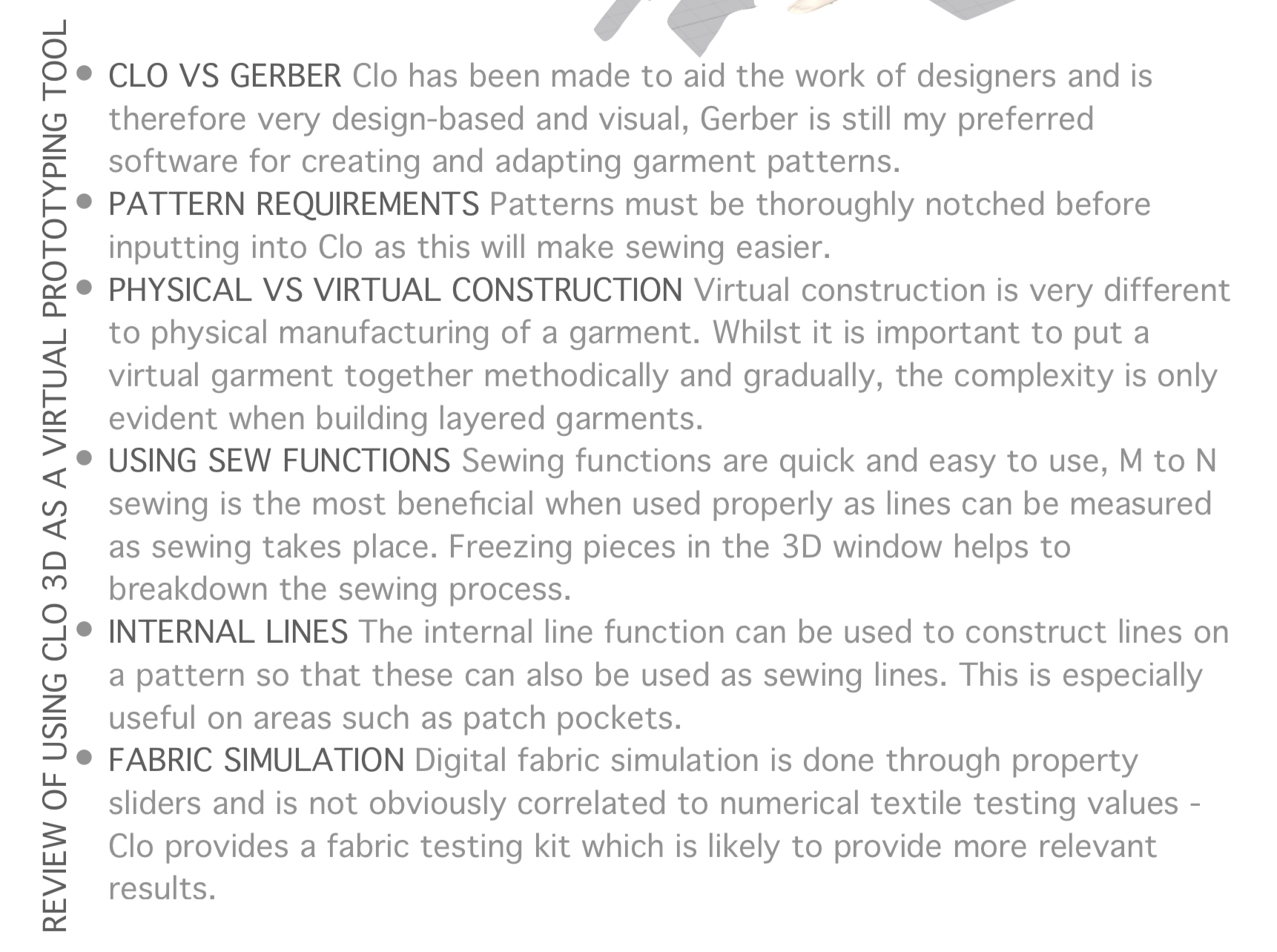
Secondly, Clo software is hugely design based and also very heavily marketed in terms of its potential outputs. This means that although it has the capacity to produce layered and intricate simulations, this would, from my experience, involve purchasing other Clo files such as the material testing packages. A review of my experience can be seen below:
Moving forward from this project, I have discovered how interested I am in the grading of patterns and would love to develop this further in my own work. Having also come from a swimming background myself, I am so interested in not only the shapes of various sized women, but also the shape of varying levels of athlete physiques in terms of muscle and fast distribution, and would love to merge this with my knowledge of pattern grading in order to produce well-fitting sportswear.
Also, Jayne is looking to bring more of this technical design element into the FDT curriculum, which from a student’s perspective I find very exciting – it would put FDT students in great stead for employment within the garment and development side of the industry. It is often difficult as a more tech-based design student to effectively showcase your abilities in a creative way, but this project has shown me that it is possible to produce very creative and visual outcomes from such an intellectual and technical starting point.
 Avatars & 3D Virtual Prototyping