I spent this week becoming familiar with the Clo3D software and used training files provided by Clo to practice my new skills. I am now confident in placing, sewing and simulating garments on avatar bodies. It’s been exhausting trying to learn a new method of fitting garments in such a short space of time but I’ve really enjoyed experimenting with industry-standard software and I am beginning to see how useful this could be for me going forward in the garment-technology side of my degree – it’s made me realise that the technology side of fashion is what I’m most interested in:)
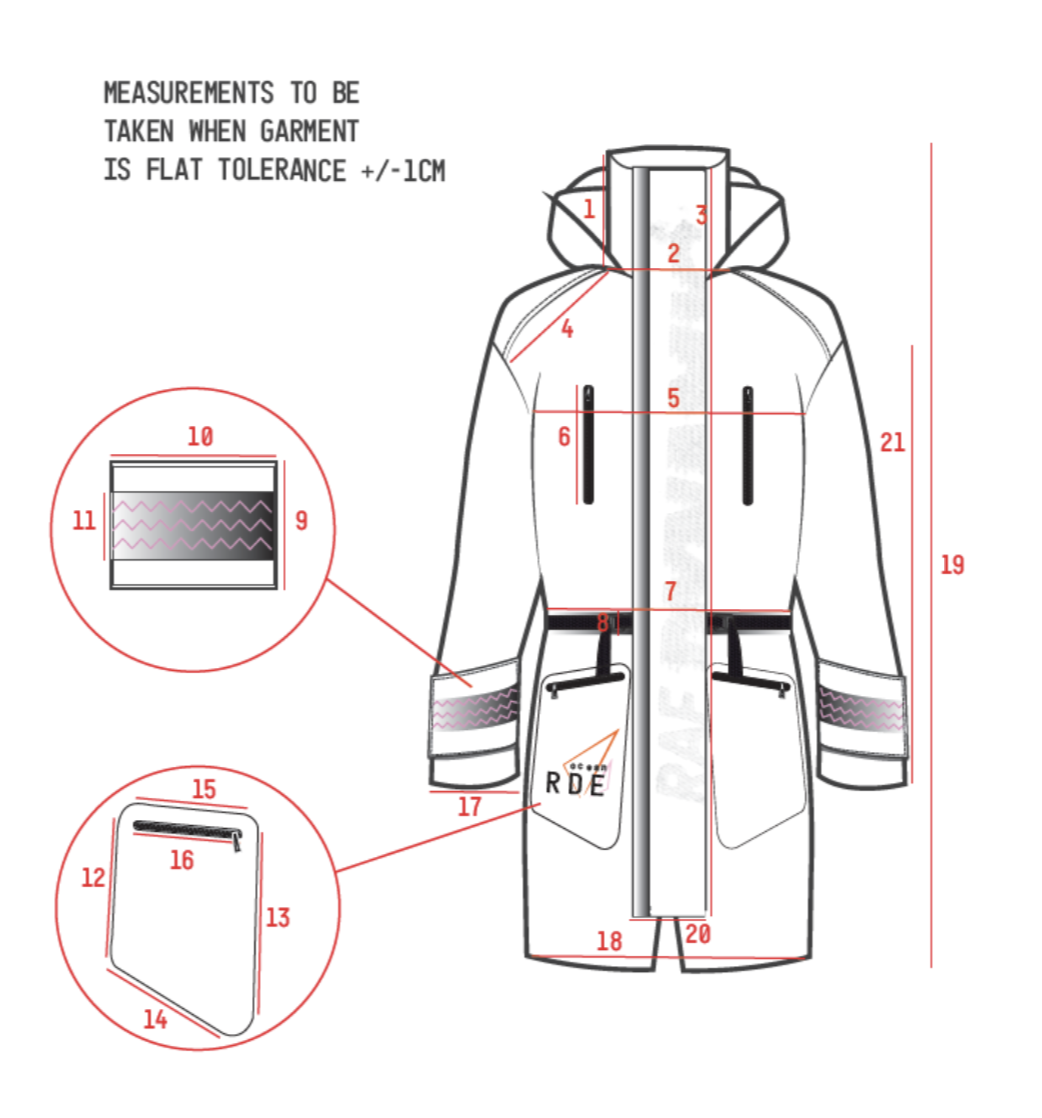
Grace Rudge – technical portfolio Sailing Jacket.
The other area that I’ve looked at this week is reviewing the size specification for the Sailing jacket which will be virtually simulated as part of the final outcome for this project (curtesy of Grace Rudge – FDT Graduate 2019). I’ve become hugely absorbed in size specifications and body proportions over the past few weeks so being able to review and alter a size specification for a real garment just made all of those elements click into place. I have learned the standard rules for grading garments and how to adapt these for dual size increments (S/M/L as oppose to UK 6-8-10). This is something that I really didn’t expect to have the chance to do as an undergraduate and I’m hoping that having knowledge in this area will make formulating my own garment size specifications from scratch much easier. I’m looking forward to putting these patterns and my Clo3D skills to the test next week when I simulate the base size (size S) and then begin to grade the patterns in line with my size specification using Gerber Accumark.
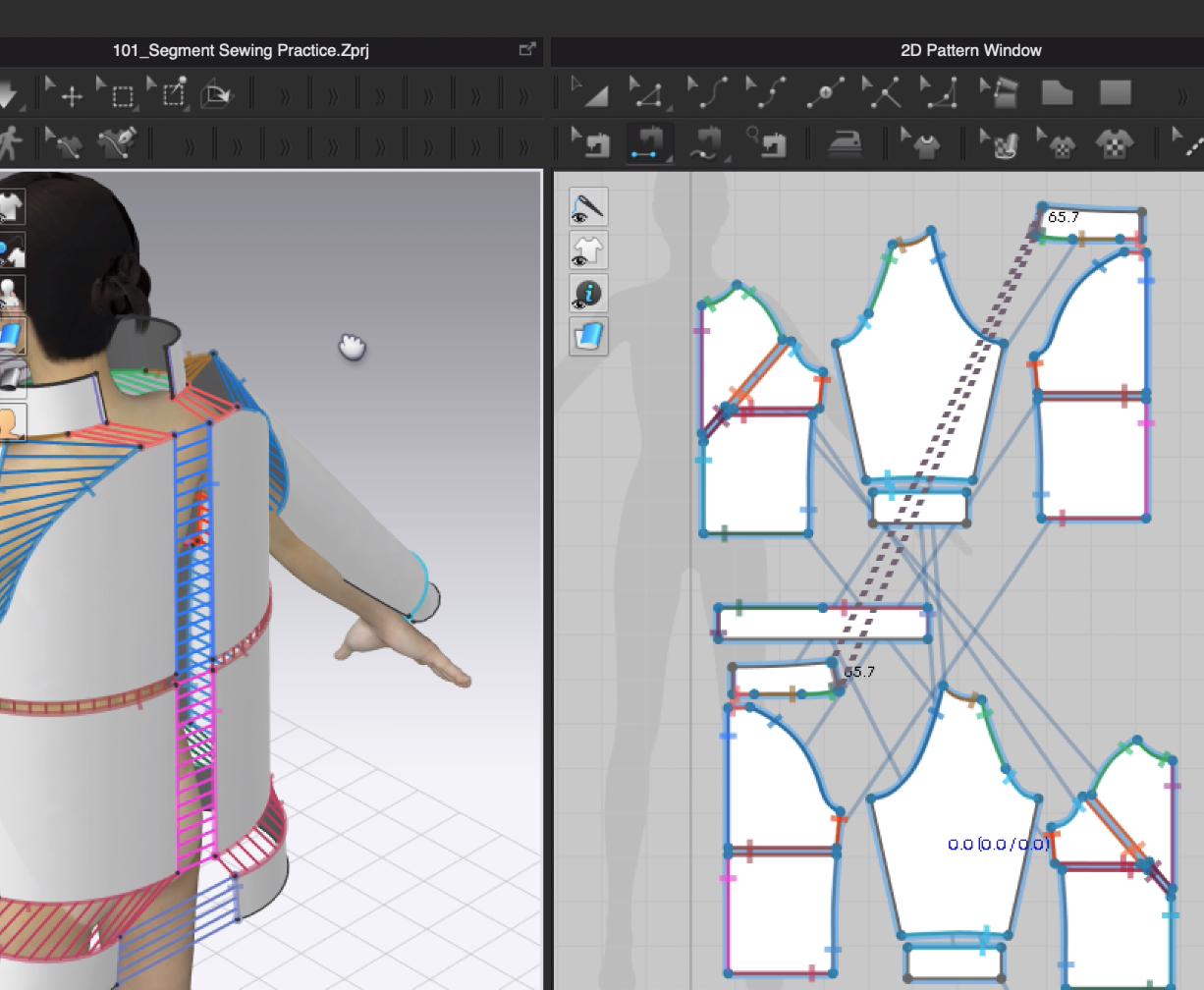
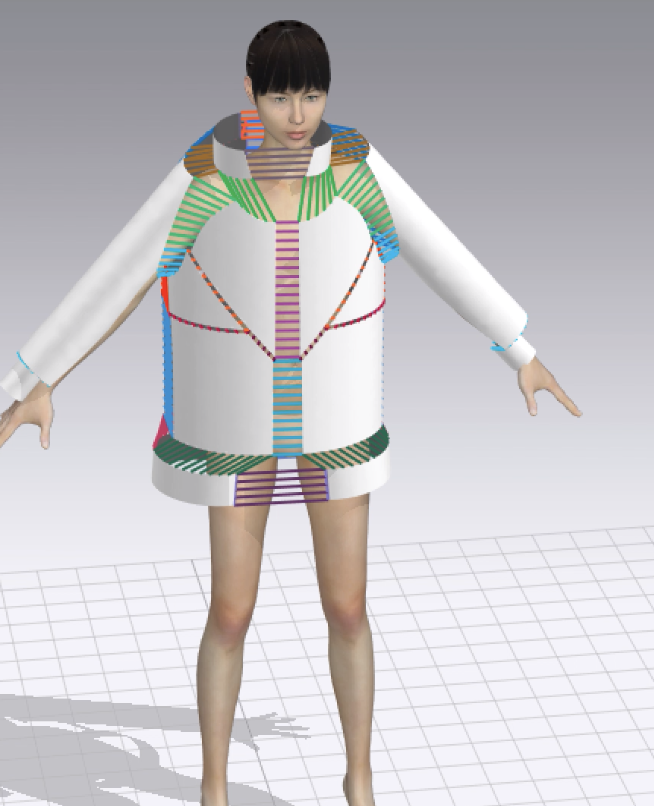
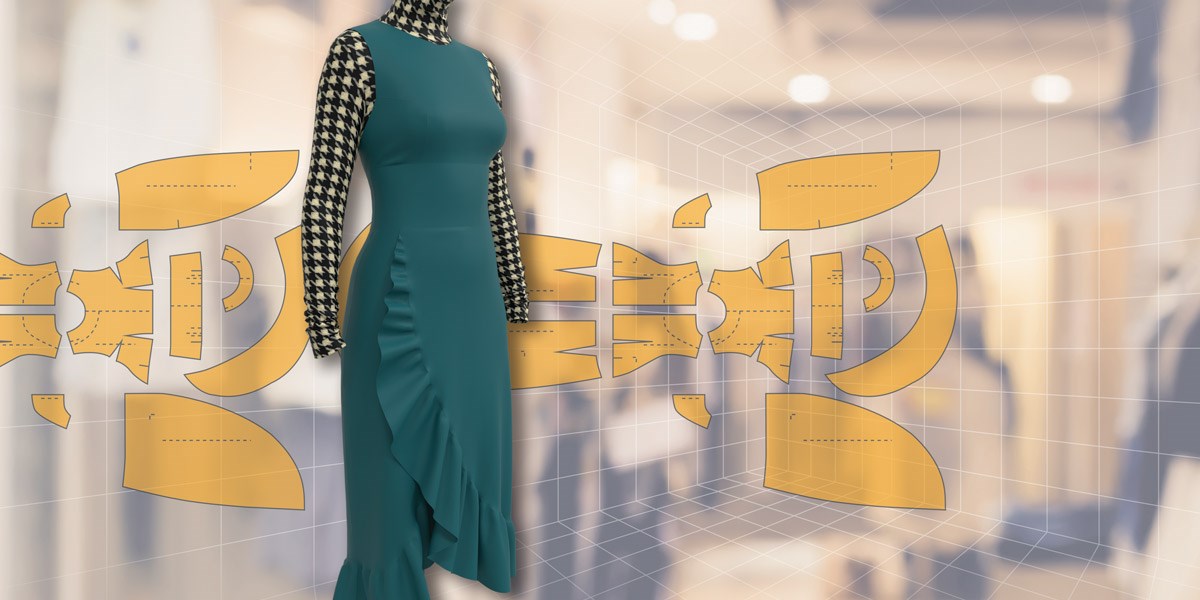
This week has been far busier than the first week and it feels as though the project is very much underway. I have spent the majority of the week becoming familiar with the Clo3D software and can now adapt the sizing of avatars and make them MOVE within the virtual space! I can also simulate the movement of pattern pieces and sew them together using the software.
It has been a fairly straightforward design programme to get used to due to it being so sleek and it’s really opened my eyes to the way in which technology can assist the design and pattern processes within the fashion industry. It has also become evident that an underlying knowledge of pattern cutting is required prior to using Clo3D to make experimenting with it much easier. For example, there is a specific order for constructing a collar correctly and the garment could not be simulated without this knowledge.
Sewing pattern pieces together in 2D window – displayed on avatar in 3D window Clo3D
On Wednesday I went in the 3D body scanner for the first time. This was a weird experience. I, like everyone else, am so used to looking down on my body and having a perception of its shape from looking down. (This confused me when Jayne first explained it, but your eyes are at the very top of your body so no matter where you are standing, you are always looking down at the rest of your body). The image produced from the body scanner looked as thoughmy normal body had been taken and squashed down. It was a bit off putting and I could understand why many people would hate the idea of having their body scanned. But after creating a female avatar from my size specification and seeing myself as a 3D model, I realised that I wasn’t quite as much of a box shape as I thought (yay).
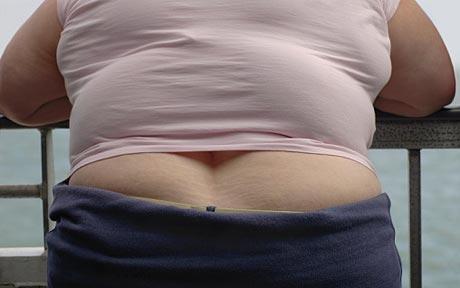
The ‘real’ curves of women telegraph.co.uk
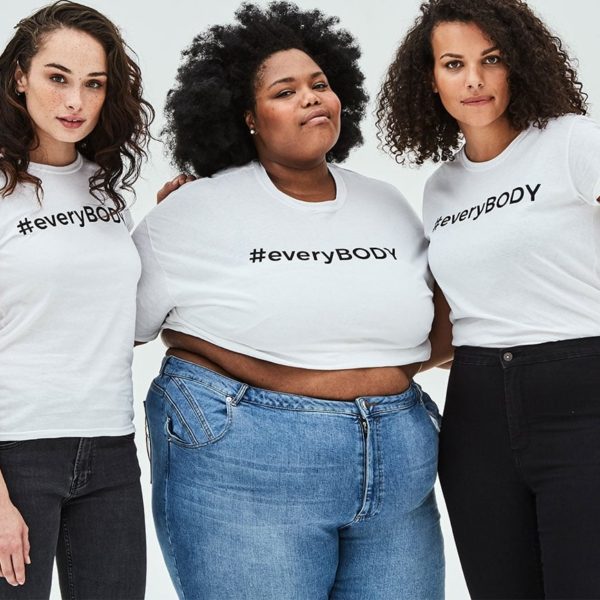
This pushed me to start researching into the average size specifications of British women, and comparing them against the unrealistic body image that the media portrays. I came across some beautiful images of women with fat rolls and undefined waists, and it became evident that there is still such a reluctance to show real women’s bodies in clothing (or lack of). Despite the ‘curve’ or ‘plus size’ movement, these women still have a very smoothed down figure with a defined waist. A sought-after hourglass figure. This goes for the smaller models too, who may appear to be curvy when modelling bikinis for example, but are still a 24” waist and tiny hips. It’s all about the camera angle, poses and marketing. But I’ve realised that this is could be a huge part to do with how garments are being graded so badly.
I mentioned in my last post that once a garment has been graded up/down two sizes, the patterns must be re-drafted (ie the process needs to restart) to be able to take the garment into further sizes successfully. If garments are being made for women who have seemingly curvy but smoothed down figures, they will not fit slim women with few curves, or larger women with curves in places other than their hips and bust. Garment shapes need to be adapted to fit the shape of women who’s bodies are realistic in today’s world.
I think that celebrating women’s bodies isn’t just to do with size, it is also majorly to do with shape and I think that using these 3D models could really alter women’s perceptions of themselves, as it did with my own experience, and also pave the way for better grading of garments by modelling them on realistic body shapes.
I have been so looking forward to starting this scholarship project.
As a Sportswear Design student, I am passionate about the fit of clothing, especially when it comes to women and their differences in sizing. I find it ridiculous that despite new technologies emerging within the fashion industry, clothing sizing is still inaccurate and badly graded. It frustrates me that a standard female model is still 5’8” and above, yet the average height of a woman in the UK is 5’3”. It isn’t inclusive at all, and body shape is hugely dependent on the age and athletic build of a woman, not just their height and weight.
stylishcurves.com
Not only that, but when developing products, designers have to sit through fitting after fitting to make alterations to the garments and corresponding patterns, and this takes up not only time but also unnecessary amounts of fabric. The fashion industry is renowned for its detrimental impact on the environment and fabric wastage is a huge cause of concern, yet designers and product developers still stretch out the process of testing and prototyping physical samples; physical samples which will end up in landfill which could’ve been simulated virtually. Alternative methods of pattern creation and garment prototyping are on the rise. Software such as Gerber3D and Clo3D (both of which I will have the opportunity to be trained on during this project) have huge potential within the fashion industry to eliminate some of the issues I have mentioned; yet they’re use is still not widely spread.
Mini-rant over. Start of project.
Jayne and I met on Monday, day one of the project, to discuss our initial thoughts about the project and where it could go. It was evident that we share the the same opinions and bugbears when it comes to sizing in the fashion industry and how non-inclusive it currently is. We decided on several hashtags to be used in the project to try and entice a larger audience and I’ve been testing these out on google, Pinterest, instagram etc for the past few days.
This week has primarily been taken up by researching the project areas; pattern grading, 3D virtual software and body sizing. I found several marketing schemes for the softwares mentioned, and list after list of the pros of using it. However it still seems as though this is more of an ideology at the moment rather than a widely used method of producing patterns. I found through my research that there were many references to the software being used as a ‘supplementary’ part of garment fittings as oppose to an alternative. From a fashion students point of view I could understand this; physical samples were vital to understanding how a garment will sit on the body. But what if the fabric simulation was more accurate, and the avatars were more life-like?
I am looking forward to beginning my training in Gerber3D next week.
gerbersoftware.com
The outcome for this project will be a series of female virtual avatars, with garment patterns that have been virtually graded to fit the various avatars. The size specification will be taken from my own body measurements as I will be using the full-body scanner next week. This will put a personal spin on the project and will be so informative for my final year studies. I can’t wait.

 Avatars & 3D Virtual Prototyping